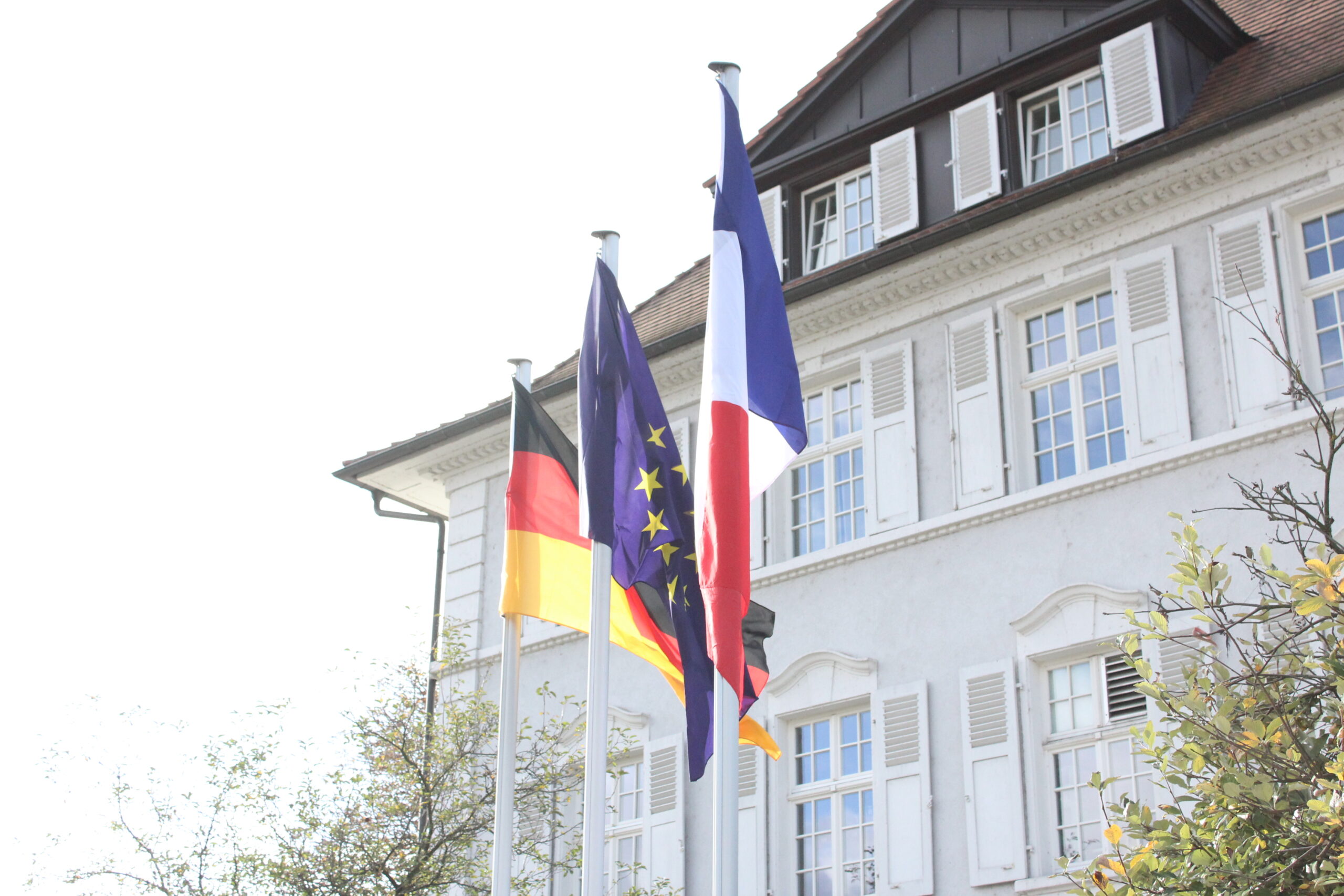

The Franco-German alliance has long been heralded as the cornerstone of European unity and stability. However, a series of crises — from the Russian war of aggression against Ukraine and divergent energy policies to the resurgence of nationalism — has introduced unprecedented tensions into this relationship. These strains have now reached a point where they compel a reevaluation of the partnership’s very foundation. In examining the diminishing synchrony between France and Germany, we are forced to confront a troubling question: Are we witnessing the end of the Franco-German union as we know it? This piece delves into the critical issues pulling Paris and Berlin apart and what these fractures mean for the future of the European Union.
I. French decline
1. Systemic flaws
The decline of France’s international influence stems from several interconnected factors that have historical, educational, and administrative roots. Take, for instance, the almost deified perception of Napoleon Bonaparte within France. Although Napoleon is lauded for his administrative reforms, particularly the Napoleonic Code, his long-term impact is less than stellar. He not only reduced women’s rights but also returned a diminished France to his successors after his military campaigns failed. Yet, the popular French narrative overlooks these negative aspects, opting for a selective reading of history. No lesson has been learned from Napoleon’s failure.
Similarly, the reign of Louis XIV reveals a pattern of strategic miscalculations. After the death of Finance Minister Colbert, Louis XIV’s endless wars drained France’s coffers, leaving it economically weakened. The state’s financial disarray reached a point where it had to sell off royal assets such as forks and spoons.
However, the problem runs deeper and is ingrained in the educational system. The French educational model not only fails to impart adequate knowledge but also fosters an environment devoid of authority and discipline. The outcome is a generation ill-prepared for the challenges of modern society, further contributing to France’s waning influence.
One cannot overlook the extreme centralization of French governance either. The concentration of power and policy-making in a centralized bureaucracy minimizes regional influence and diversity, leading to a homogenized narrative. For instance, up until the 1960s, regional languages were spoken widely across France; however, central policies eventually led to their decline. This habit to repress diversity also affects France’s international relationships, reducing its capacity to adapt and be a significant player on the global stage.
This centralization even influences public opinion and discourse, which can be seen in the concept of ‘la doxa,’ or a single line of thought endorsed by the French state. Such a unilateral perspective limits critical inquiry and discussion, comparable to the ideological rigidity seen in the USSR, albeit executed with greater finesse.
Therefore, in light of these systemic issues and emerging alternatives, France’s role as a vital international partner is no longer what it once was.
2. The Intellectual bankruptcy of the French technocracy
Faced with the disorder and inefficiency commonly attributed to parliamentary democracy, especially during the chaotic period of the Third Republic’s last years, the Vichy government sought alternative forms of governance. They believed that technical experts in administration and planning could guide the nation more effectively than career politicians. This was a turning point; instead of relying on parliamentary debates and democratic consensus, Vichy paved the way for rule by a cadre of technocrats.
This technocratic approach didn’t disappear with the fall of Vichy. It gained more traction in the Fourth Republic (1946-1958), as France was grappling with post-war reconstruction and the onset of the Cold War. The need for rapid economic development and modernization made the administrative prowess of technocrats seem appealing. At this time, the notion of ‘planification,’ or state-directed economic planning, came into vogue, symbolized by the establishment of the Commissariat Général du Plan in 1946.
The Fifth Republic (1958-present) was where technocracy truly flourished. De Gaulle’s government, facing an almost existential crisis due to colonial issues and the economic challenges of a post-war world, further centralized power. Institutions like the École Nationale d’Administration (ENA) churned out a stream of technocrats who occupied key positions in public administration, ministries, and even large state-owned corporations. These were individuals well-versed in law, economics, and management but were often criticized for being out of touch with the day-to-day experiences of regular citizens.
As the years passed, these technocrats grew more influential. In the ’80s and ’90s, they were crucial in pushing for European integration and the adoption of the Euro, demonstrating their knack for long-term planning and expertise in complex policy matters. However, this was also a period where their limitations became evident, particularly in the handling of economic crises and social inequality. The ‘technocratic disconnect’ with the population has often been cited as a reason for rising populism and skepticism towards European institutions in recent years.
Entering the 21st century, the limitations of technocracy became increasingly evident. The 2008 financial crisis and subsequent economic downturn exposed gaps in the technocratic management of the economy. Further, the challenges posed by migration or terrorism highlighted a flexibility crisis in technocratic governance, which seemed ill-equipped to handle rapid changes and complexities.
In summary, while French technocracy was initially conceived as an antidote to the inefficiencies and instabilities associated with parliamentary governance, its trajectory from Vichy to the present day illustrates a model that, although effective in certain areas, has significant drawbacks. The most prominent of these is a lack of adaptability and responsiveness, a gap between the governors and the governed, and a diminishing of France’s influence on the international stage. Therefore, the technocratic model, though instrumental in shaping modern France, has played a role in its declining relevance in global affairs.
II. Germany’s total strategic failure
Germany’s diminished role on the international stage is a multifaceted issue, influenced by a combination of failing strategies, geopolitical dependencies, and domestic policy missteps. Over-reliance on Russian gas has been a crucial failure. It’s a blow to the German economy, requiring rapid adjustments and increased financial expenditure to secure alternative energy sources, often at higher prices.
The dependency on American military might for securing Germany’s commercial routes is another angle of vulnerability. This dependency imposes a sort of soft hegemony, where Germany, in many instances, has to fall in line with American political and diplomatic demands. Even if Germany were to invest more in defense to mitigate this dependency, achieving military self-sufficiency would take years, if not decades, and would require significant changes in public opinion and government policy, considering the post-World War II hesitancy to militarize.
Turning towards Asia, Germany’s economic bonds with China appear increasingly fragile as the Chinese economy slows down. Once seen as an alternative to Western markets, China is now a paradox for German policy. On one hand, the Chinese market is too significant to ignore; on the other, economic engagement with China carries its own set of challenges, from IP theft to human rights issues, that can’t be brushed aside. The balance is delicate and leaves Germany vulnerable to economic downturns or policy shifts within China.
Domestically, Germany’s decision to phase out nuclear energy plants in favor of renewable sources was supposed to set an example for a cleaner future but has come with its own set of complications. Renewable energy has its own set of logistical and reliability issues. When the wind doesn’t blow, and the sun doesn’t shine, Germany has to look elsewhere for its energy, sometimes at costs that can be politically and economically prohibitive.
Immigration policy is another contentious area. Initially considered a solution to an aging population and declining workforce, the mass intake of immigrants has triggered nationalist and anti-immigration sentiments, not just in Germany but across Europe. This has led to a rise in support for parties that sometimes oppose the very core principles of the European Union, undermining its cohesion and strength. Germany’s immigration policies have thus indirectly challenged the stability of the European project itself.
Germany’s accumulated challenges present a diminished picture of a country that was once viewed as Europe’s stalwart, a leader both economically and politically. Today, the country finds itself in a precarious position, hemmed in by foreign dependencies, contentious domestic policies, and a changing geopolitical arena that offers fewer easy choices.
III. Divergences between France and Germany
During the Cold War, France harbored fears that Germany would either become too closely aligned with the U.S. or seek neutrality in exchange for reunification, particularly when it came to the deployment of missiles. Despite these worries, Germany managed to balance its Atlantic and European commitments while also engaging in détente with the Soviet Union (Ostpolitik).
However, the post-Cold War era has significantly altered this balance. With the dissolution of the Soviet Union, the primary security threat that had originally fostered Franco-German collaboration vanished. The emphasis on military capabilities diminished, resulting in a shift toward economic power as the primary metric of international influence. In this economic arena, Germany took definitive steps to reform and strengthen its position, while France lagged, unable to maintain its earlier competitive stance.
The early 2000s marked a particular turning point, as Germany embarked on labor market reforms under Chancellor Gerhard Schröder. During the same period, France’s competitiveness began to decline (as a result of Schröder’s social dumping reforms).
Societal distance has also grown between the two nations. Language studies have declined: only 15% of French students study German, compared to 36% in the 1970s. Twinning initiatives between cities have lost momentum, and organizations aimed at fostering Franco-German relations are losing relevance.
Energy policy also starkly divides the two. Germany has phased out nuclear energy in 2022. France, conversely, is heavily reliant on nuclear energy, accounting for 80% of its electricity production. This divergence complicates efforts toward a unified European energy strategy, particularly when each country has different key suppliers for resources like natural gas.
Germany thrives economically but shows little initiative for political leadership even within the European context. This isn’t just an absence; it’s a choice. Germany opts to exert economic strength but shies away from complementing it with political or military leverage.
France, in contrast, continues to exert political and military influence but lacks the economic dynamism to support its ambitions. It projects a façade of co-leadership with Germany within the EU but in reality, clings to German economic stability as a lifeline. Its rhetoric masks a lack of reform and an unwillingness to adapt to modern economic realities.
Both nations operate in a state of denial but at opposite ends of the spectrum. France clings to a waning global influence, unwilling to accept its reduced status. Germany, though economically formidable, abdicates the political leadership that should logically follow its economic clout.
The dissonance between the two nations extends beyond mere policy differences to fundamentally different visions of their roles in a post-Cold War world. They are bound together in an uncomfortable union, where each is dependent on the other to mask their individual inadequacies. This paradoxical relationship challenges the integrity of European unity and raises questions about the future direction of the EU itself.
The Franco-German relationship has long been considered the engine driving European integration. Yet, a quarter-century after the Cold War’s end, both countries appear enmeshed in their own national concerns, mirroring a broader trend in Europe. Germany clings to fiscal prudence and export-driven growth, while France attempts to mollify its populace with promises, taking on increasing debt to sustain social peace.
While Berlin and Paris are locked in an economic version of a ‘cold war,’ the EU is left paralyzed, unable to forge a coherent strategy for recovery or expansion. What we’re seeing is not merely Franco-German discord, but a reflection of larger disunities within the EU itself.
Each country is intent on preserving its own economic and political stability, even at the expense of broader European interests. Unless Paris and Berlin can find a way to reconcile their different economic philosophies and share the burden of leadership, the European Union’s future remains uncertain.
The Eurozone is in a precarious situation. The economically robust North, led by Germany, is at odds with a weaker Southern Europe mired in unemployment and debt. France sits in the middle, losing competitiveness and industrial might, endangering the stability of the entire zone.
Emmanuel Macron’s initial impassioned proclamations on Europe were met with reticence in Germany. In Germany, the so-called “couple” is often downplayed as a mere “engine” for Europe.
Electorally, both countries are undergoing shifts, but their implications for the Franco-German partnership remain unclear. In Germany, Annalena Baerbock of the Green Party had a promising start but has faced significant setbacks. Similarly, Macron is not without challenges; his party is politically weakened, and his focus remains primarily domestic. And while German candidates emphasize Franco-German relations, this topic does not resonate as strongly with French presidential contenders.
President Macron’s attempt to reinvigorate the relationship through the Aachen Treaty, which aims to prepare the nations for 21st-century challenges, hasn’t yet led to meaningful reforms. Germany’s reluctance to upset its domestic political balance has often resulted in a status quo that does little to address the EU’s urgent needs. This reluctance places the onus on France to prove the viability of its proposals, thus burdening Paris with an unreasonable load.
Moreover, France’s new strategy to form broader alliances with nations like Spain and Italy can be seen as a tactic to exert pressure on Germany to commit to necessary reforms.
The Franco-German relationship has long been considered the central axis around which European unity spins. However, this partnership appears to be losing traction under the weight of regional crises and diverging national priorities. The Ukrainian war serves as a focal point of strain, laying bare not just the contrasting visions of security and foreign policy but also emphasizing the economic fault lines. Both Paris and Berlin have an immediate need to secure energy supplies and ensure social stability; however, their approaches to these challenges are significantly different.
Germany’s dependency on Russian natural gas puts it in a precarious situation, forcing it to walk a diplomatic tightrope. Berlin’s unique commercial ties with Beijing add an additional layer of complexity, making it difficult for the coalition government to adopt a unified stance. Olaf Scholz’s administration faces internal pressures from coalition partners with varying ideological stances on these matters, thus limiting its flexibility in foreign affairs.
France, on the other hand, remains committed to pursuing a more assertive European foreign policy. President Macron’s preference for ‘encirclement’ aims at forging multiple mini-alliances within the EU on specific issues, while also holding Germany as the key to realizing broader reforms. This method seems to imply a growing impatience with Berlin’s caution and a desire to move ahead with or without Germany if necessary.
The question of mutual vision is perhaps the most critical one. Germany seems to be opting for realpolitik, prioritizing national concerns over collective European interests. France appears to be striving for an active EU that wields substantial influence on the global stage, at least rhetorically.
IV. A Europe without French-German parents
1. A Disorganized EU
The crises of the past few years have not only exposed the fissures in the relationship but also thrown into question the foundational understanding between these two nations. The question is no longer how France and Germany can lead the European Union but rather whether they can even continue to lead in harmony with each other. The issues at stake are too grave to be overlooked, and the repercussions extend well beyond the bilateral relationship to the European Union as a whole. If the foundations of the Franco-German relationship continue to erode, the implications are clear. An EU led by far-right parties such as Marine Le Pen’s National Rally in France and the Alternative for Germany (AfD) in Germany would disrupt established norms and agreements. The compatibility of such governments with the current Franco-German agenda is low. Under these circumstances, each nation would most likely focus inward, further solidifying their individual interests at the cost of bilateral cooperation.
Stricter border controls and immigration policies would become a priority, potentially dismantling the Schengen Zone agreement that currently allows for free movement between many EU countries.
Economic policies would also shift considerably. Trade policies could become more protectionist, with a renewed emphasis on safeguarding domestic industries over fostering international cooperation. This inward focus could disrupt the single market and have far-reaching implications for EU-member economies, from agriculture to high-tech sectors. Multi-lateral trade agreements, commonly pursued by the EU, would possibly be replaced by bilateral agreements serving national interests.
Financially, skepticism towards the Euro might gain momentum, potentially leading to serious discussions about returning to national currencies or at least overhauling the existing monetary union structures. Given that these parties are generally critical of centralized power, Brussels would lose much of its current influence, leading to a potential devolution of powers back to member states. This would result in less coordinated fiscal policies and might erode the bloc’s ability to enforce budgetary rules among its members.
Foreign policy stances would also harden. Far-right parties such as these generally advocate for a foreign policy based on realpolitik rather than shared values, potentially creating tensions with the United States and other NATO allies. In such a scenario, existing EU-wide sanctions against countries like Russia could be lifted, leading to a less unified stand against perceived aggressors.
The institutions that facilitate cooperation across a myriad of sectors, from law enforcement to scientific research, could be weakened or fundamentally altered. In this environment, the EU would not only change dramatically from within but its standing on the global stage would also be affected. Rather than acting as a bloc, member states would likely pursue their individual interests, diminishing the EU’s power and influence internationally.
2. How Poland and its allies should prepare
Poland and its closest allies should be prepared to adapt both their domestic and foreign policies for a fundamentally altered landscape.
Firstly, Poland has to fortify its own borders and security measures. This would be essential if the Schengen Zone were to dissolve or undergo strict modifications. Strengthening national defense capacities should become a priority, possibly necessitating increased military spending and enhanced defense collaboration with close allies like the United States and other NATO members.
On the economic front, Poland should diversify its trade partners and reduce its dependency on the single market. This might involve expanding trade relations with countries outside of the EU and considering bilateral agreements that could replace or supplement existing multilateral ones. Poland should also evaluate the feasibility of creating economic blocs with like-minded countries to protect shared interests, for instance, within the Visegrád Group or the Three Seas initiative.
Financial preparations could involve strategic reserves or contingency plans for currency fluctuations, particularly if the Eurozone becomes unstable. Poland, not being a part of the Eurozone, has a certain level of insulation but should still prepare for economic ripple effects.
Domestically, Poland needs to prepare for the potential decrease in EU funding, particularly in sectors like agriculture, infrastructure, and scientific research. Alternative funding mechanisms and revenue streams will need to be identified, possibly leading to more public-private partnerships or increased domestic spending in these sectors.
In the sphere of foreign policy, Poland should work to strengthen its relationships with nations that share its democratic values, especially if EU foreign policy moves in a direction that Poland finds problematic. This might involve deepening relations with the United States, Canada, and possibly the United Kingdom, given its departure from the EU. Special attention should be given to maintaining robust intelligence sharing and law enforcement cooperation with trusted allies, outside of EU mechanisms if necessary.